 B-insights
Table of Contents
BeekStarting your journey in beekeeping for beginners can be exciting, but choosing the right equipment is key. As a beginner, having the proper tools and gear makes beekeeping safer, more enjoyable, and easier to manage. With the right setup, you’ll be well-prepared to interact with your bees confidently and ensure their health and productivity.
BeekStarting your journey in beekeeping for beginners can be exciting, but choosing the right equipment is key. As a beginner, having the proper tools and gear makes beekeeping safer, more enjoyable, and easier to manage. With the right setup, you’ll be well-prepared to interact with your bees confidently and ensure their health and productivity.
BeekStarting your journey in beekeeping for beginners can be exciting, but choosing the right equipment is key. As a beginner, having the proper tools and gear makes beekeeping safer, more enjoyable, and easier to manage. With the right setup, you’ll be well-prepared to interact with your bees confidently and ensure their health and productivity.
In this beginner’s guide, we’ll walk you through the essential beekeeping equipment you need, from protective gear like bee suits and gloves to hive tools and feeding equipment. By the end, you’ll know exactly what to gather to confidently start your beekeeping experience with confidence. Let’s dive into the must-have tools for new beekeepers!
For beekeeping for beginners, having protective gear like a bee suit, gloves, and veil is essential. Working with bees can feel a bit intimidating at first, but with the right equipment, you’ll gain the confidence to handle your hive safely. Here’s a breakdown of the essential protective beekeeping gear every beginner should have:
1. Protective Gear for Beekeeping for Beginners: Essential Bee Suit, Gloves, and Veil.
- Bee Suit: A full bee suit is the primary layer of protection between you and the bees. It covers your body to prevent stings, allowing you to work comfortably. Look for a suit made from breathable material to stay cool, especially if you’ll be inspecting your hive in warm weather. A ventilated bee suit is ideal for reducing heat, while providing full protection.
- Beekeeping Gloves: Beekeeping gloves are essential for protecting your hands, which are most exposed when handling frames and hive components. For beginners, thicker gloves offer added protection and peace of mind, although some experienced beekeepers prefer thinner gloves for better dexterity. Choose gloves that balance safety and comfort, especially as you’re getting started.
- Bee Veil: A veil protects your face and neck, which are especially sensitive to bee stings. Various styles are available, including round veils and folding veils, so choose one that provides both visibility and comfort. A veil is a must-have item that gives you peace of mind while working close to your hive.
Pro Tip: When choosing protective beekeeping gear, look for suits and veils with secure zippers or elastic closures to prevent bees from sneaking in.
With these essentials in place, you’ll be well-equipped to start your beekeeping journey safely and confidently. Protective beekeeping gear is a valuable investment that allows you to enjoy working with your bees while staying safe.
2: Essential Tools for Beekeeping for Beginners: Hive Tool, Smoker, and Bee Brush.
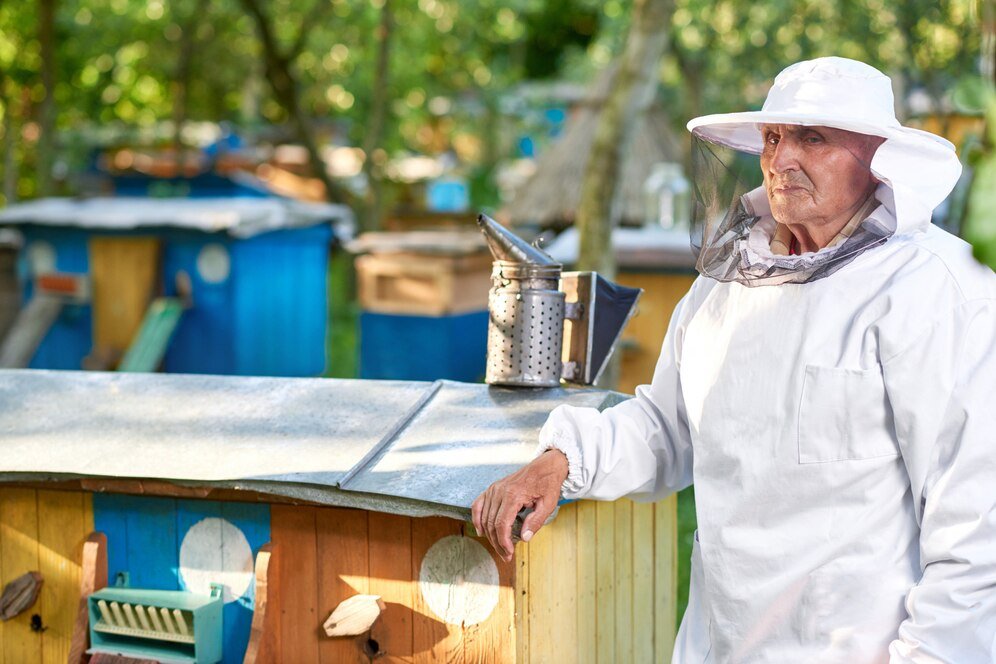
In addition to protective gear, essential tools for beekeeping for beginners, like a hive tool and smoker, make managing the hive easier. These essential tools are perfect for beekeeping beginners and make managing your hive easier. Here’s a rundown of the essential beekeeping tools every beginner should have:
- Hive Tool: The hive tool is a multipurpose instrument and one of the most essential items in your toolkit. It helps you pry open the hive, separate frames, and scrape away propolis (a sticky substance bees use to seal cracks). Look for a hive tool that fits comfortably in your hand and has a strong, durable design. Beginners often find that a standard flat or J-shaped hive tool works best for easy handling.
- Bee Smoker: A bee smoker is vital for calming your bees during inspections or when harvesting honey. The smoke disrupts the bees’ communication, making them less likely to sting. When choosing a smoker, look for one with a heat guard and a sturdy bellows for consistent airflow. You can use natural materials like pine needles or wood pellets as fuel, which are effective and safe for your bees.
- Bee Brush: A bee brush is a soft-bristled brush that allows you to gently move bees off frames or other surfaces without harming them. It’s especially helpful when inspecting the hive or harvesting honey, as it lets you work around the bees without disturbing them too much. Look for a brush with soft bristles to ensure you’re handling your bees as gently as possible.
Pro Tip: Keeping your tools clean and well-maintained helps prevent the spread of diseases in the hive. Regularly inspect your hive tool, smoker, and brush for signs of wear and clean them as needed.
With these essential beekeeping tools, you’ll be ready to manage your hive more effectively and safely. Having the right tools on hand will make your experience smoother and help you build confidence as a new beekeeper.
3: Beehive Setup Guide for Beekeeping for Beginners: Right Hive, Frames, and Foundation.
The right beehive setup is crucial for beekeeping beginners, but with the right guidance, it’s manageable and rewarding. Choosing the right hive and components provides a safe, productive environment for your bees. Here’s what beginners need to know about beehive setup:
- Types of Hives: There are a few common hive types to choose from, each with its own advantages. For beginners, the Langstroth hive is a popular choice due to its modular structure, which makes it easy to inspect and expand as your colony grows. Other options include the Top Bar hive, known for its simplicity, and the Warre hive, which mimics natural bee habitats. Start with a Langstroth if you’re looking for versatility and ease of use.
- Frames and Foundation: Frames are essential for organizing the hive’s internal structure. Each frame provides a base for bees to build honeycomb, store honey, and raise brood. Many beginners start with frames that include pre-waxed foundation, which gives bees a head start in building comb. Foundation also keeps comb straight, making inspections easier. When assembling your hive, make sure frames are securely fitted to avoid disturbing the colony during checks.
- Additional Hive Components: A complete hive includes several other key parts, such as the inner cover, outer cover, bottom board, and entrance reducer. The inner cover helps with ventilation and temperature control, while the outer cover protects the hive from weather. The bottom board serves as the hive’s floor, and an entrance reducer limits access, helping to protect the hive from pests and cold drafts.
Pro Tip: Place your hive in an area that gets morning sunlight but is sheltered from strong winds. This setup keeps your bees active and productive while protecting them from extreme weather.
Choosing the right hive, frames, and foundation sets a strong foundation for your beekeeping journey. With a well-structured hive, your bees will be comfortable, secure, and ready to thrive.
4: Feeding Equipment for Beekeeping for Beginners: When and How to Feed Bees
Feeding your bees can be especially helpful when natural food sources are scarce, such as early spring or during dry periods. Providing supplemental food ensures your bees stay healthy and well-nourished. Here’s what beginners need to know about feeding equipment and when to feed their bees:
- Types of Feeders: There are several types of feeders available, each with its own advantages depending on your setup and needs:
- Entrance Feeder: This feeder sits at the entrance of the hive, making it easy to refill without disturbing the hive. It’s simple to use and ideal for beginners, although it’s more exposed and can attract other insects.
- Top Feeder: Placed on top of the hive frames, this feeder holds a larger volume of food and is well-protected from other pests. It’s especially helpful when you need to feed your bees for extended periods.
- Frame Feeder: This feeder fits within the hive frames, which keeps it close to the bees and minimizes exposure. It’s a good option in colder weather, as the bees won’t need to leave the hive to access the food.
- When to Feed Bees: Although bees typically gather enough food on their own, there are certain times when feeding can be beneficial:
- Early Spring: Feed bees in early spring when they’re just emerging from winter, as natural nectar sources may still be limited.
- Fall Preparation: In the fall, supplemental feeding helps bees build up food stores for winter. This is especially important if your hive doesn’t have enough honey stored to support the colony.
- Emergency Feeding: During droughts, sudden cold snaps, or other food shortages, emergency feeding can keep your bees nourished and healthy.
Pro Tip: Use a simple sugar syrup (a 1:1 or 2:1 water-to-sugar ratio) for feeding. Avoid honey from unknown sources, as it can introduce diseases into your hive.
Providing supplemental food at the right times can make a big difference in your hive’s success. Feeding equipment is an optional but useful addition, particularly for new beekeepers who want to ensure their bees have plenty of resources.
5: Beekeeping Equipment Costs: Budgeting Tips and Where to Buy Supplies:
Starting your beekeeping journey comes with some initial costs, but with a bit of planning, you can set up a hive without breaking the bank. Here’s an overview of the basic costs involved and tips for finding quality supplies:
- Estimating the Costs: The cost of beginner beekeeping equipment can vary based on quality, brand, and your location. Here’s a general breakdown of what you might expect:
- Protective Gear: A good bee suit, gloves, and veil can range from $50 to $200, depending on quality and materials.
- Hive and Frames: A Langstroth hive setup with frames typically costs between $150 and $300, while other hive types may vary.
- Essential Tools: Items like a hive tool, smoker, and bee brush are generally affordable, totaling around $30 to $60.
- Feeders and Extras: Feeders and other accessories can add an additional $20 to $50, depending on what you choose.
- Budgeting Tips for Beginners: Here are some practical tips to help keep costs down while ensuring you get high-quality equipment:
- Prioritize Essentials: Start by purchasing the most important items, like protective gear, the hive, and basic tools. You can add extras, like feeders or additional frames, as you gain experience.
- Consider Starter Kits: Some suppliers offer beginner beekeeping kits that bundle essential items at a lower price. Look for reputable kits that include protective gear, a hive, and tools you know you’ll need.
- Invest in Quality Gear: It’s tempting to go for the cheapest options, but investing in durable, high-quality equipment can save money in the long run and enhance your experience.
- Where to Buy Beekeeping Supplies: Here are a few reliable places to buy beekeeping equipment:
- Local Beekeeping Suppliers: Many areas have local suppliers or co-ops where you can buy gear and receive helpful advice. Buying locally also supports small businesses and reduces shipping costs.
- Online Stores: Websites like Mann Lake, Betterbee, and Amazon offer a range of equipment with convenient shipping. Be sure to read reviews to verify quality.
- Beekeeping Associations: Local or regional beekeeping associations sometimes offer discounts on supplies or can direct you to trusted suppliers.
Pro Tip: Keep an eye out for sales, particularly during off-seasons, and consider joining a local beekeeping group where you might find gently used equipment.
With a realistic budget and a focus on quality essentials, you can get started in beekeeping without overspending. Planning your purchases wisely will ensure you have everything you need for a smooth and successful start.
6: How to Choose the Best Beekeeping Equipment for Beginners:
Choosing the right equipment is essential for a positive start in beekeeping. With so many options available, it’s important to know what to look for so that you invest in quality gear that will last. Here are some key tips for selecting the best beekeeping equipment for beginners:
- Prioritize Quality over Cost: Although beginner beekeeping equipment is available at various price points, it’s worth investing in durable, high-quality gear. Protective equipment like a bee suit and veil should be well-made to ensure your safety, and a sturdy hive will protect your colony for years to come. Quality equipment may cost a bit more initially, but it pays off in reliability and longevity.
- Look for Starter Kits with Essential Items: Many suppliers offer beginner beekeeping kits that include the basics, such as a hive, protective gear, and essential tools. These kits can simplify the purchasing process and sometimes offer a discount compared to buying each item separately. When choosing a kit, check to make sure it includes items you actually need and doesn’t come with unnecessary extras.
- Check for User Reviews and Recommendations: Before buying equipment, read reviews from other beekeepers or consult local beekeeping communities. Reviews can provide insights into product quality and functionality, helping you make informed choices. Experienced beekeepers often have valuable advice on where to find reliable gear and what to avoid.
- Consider Equipment with Upgrade Options: As you gain experience, you may want to expand or upgrade your setup. Look for equipment that’s compatible with add-ons or can be expanded to meet your needs as your hive grows. For instance, a modular Langstroth hive allows for easy expansion by adding extra boxes.
Pro Tip: Make a list of essential items before you start shopping to stay focused on what you truly need. This will help prevent overspending on unnecessary equipment.
Selecting the best beekeeping equipment gives you a solid foundation for success. By focusing on quality, practical starter kits, and reliable reviews, you’ll set yourself up for a smooth and enjoyable beekeeping experience…
7: Conclusion: Essential Beekeeping Equipment for a Successful Start:
Starting beekeeping can be a fulfilling journey, and having the right equipment is key to ensuring your experience is safe, enjoyable, and successful. By investing in quality protective gear, essential tools, and a well-designed hive, you’ll be well-prepared to care for your bees and watch your colony thrive.
Remember, each piece of equipment serves a purpose, from your bee suit and veil that keep you safe, to the hive tool and smoker that make hive management easier. With this beginner-friendly guide, you now have the knowledge to make informed choices as you gather your beekeeping essentials.
Ready to start your beekeeping journey? Explore our other posts for more tips on hive setup, colony care, and seasonal beekeeping tasks. Leave a comment below if you have any questions, or share your experiences with fellow beginner beekeepers!
By following these tips on beekeeping for beginners and gathering the right equipment, you’ll be set for success.
For more in-depth information on bee health, check out the American Beekeeping Federation website.